What Does A CCTV Engineer Do? Roles, Skills And Career Options
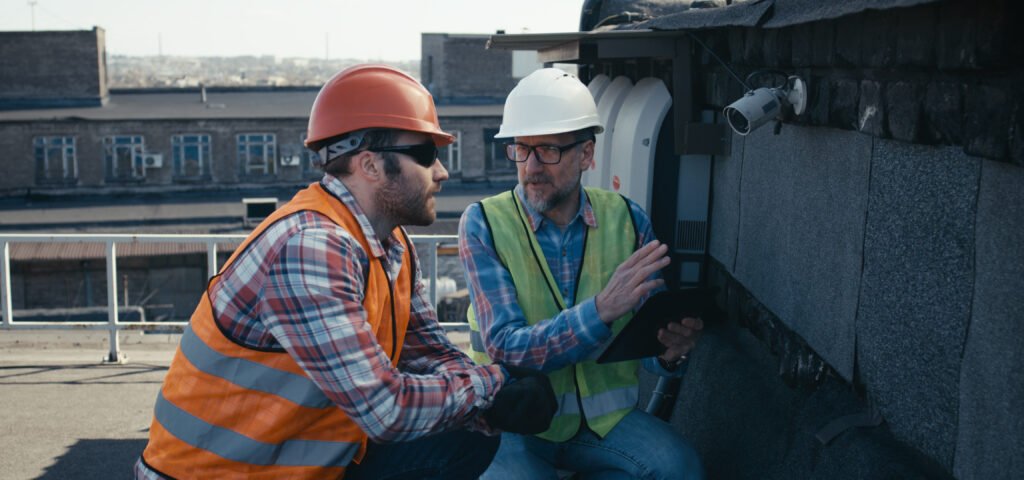
If you are considering a career in electronic security, CCTV is one of those areas that can look fairly straightforward from the outside. Cameras go up, pictures appear on a screen and somebody needs to install and maintain the equipment.
In reality, there can be a lot more to the job than that.
Modern CCTV brings together cameras, cabling, networks, recording equipment, software and increasingly sophisticated analytics. Depending on the type of company you work for and the point you reach in your career, you could be physically installing equipment one day and diagnosing a network or configuration problem the next.
That variety is also what makes CCTV an interesting career route. You can start with the practical side of the job and gradually move into service, fault-finding, networking, commissioning, integrated systems, design or project work as your experience develops.
So, what does a CCTV engineer actually do and what does the career look like once you are in it?
What Does A CCTV Engineer Actually Do?
The broad answer is that a CCTV engineer installs, maintains, repairs and commissions surveillance systems, but that description covers quite a wide range of jobs.
An installation engineer could spend much of their time mounting cameras, running and terminating cabling, installing containment and connecting equipment. A service engineer working on the same type of system might hardly do any of that. Their day is more likely to involve arriving at an existing customer site, finding out why something has stopped working and getting it operational again.
Move further towards commissioning and the job changes again. There is generally less emphasis on physically getting equipment onto the wall and more on configuring cameras, networks, recording equipment and software so that the complete system works as it was designed to.
This is why two people can both have “CCTV Engineer” written on their CVs but have quite different levels of experience. When we speak to employers about CCTV vacancies, the important questions quickly become what systems someone has worked with, whether they install or service, how good their fault-finding is and how comfortable they are with networking and commissioning.
It’s also one of the reasons we’ve previously looked at whether CCTV is still one of the best routes into electronic security. There are several directions you can take once you have built a solid grounding in the technology.
What Does CCTV Installation Work Involve?
Installation is a common place to begin because it gives engineers a practical understanding of how CCTV systems actually go together.
On a new installation you might be mounting cameras, installing containment, pulling cables, terminating connections and fitting equipment such as switches, recorders and power supplies. On larger projects you could be one engineer within a team working through a substantial installation over a period of weeks or months.
There is more to installing a camera than simply finding somewhere convenient to mount it. The position, field of view and purpose of that camera all matter. If the system has been designed to identify somebody entering a particular area or provide coverage of a specific asset, the finished installation needs to achieve that.
The working environment varies enormously as well. CCTV engineers can find themselves in offices, warehouses, schools, hospitals, retail sites, industrial premises, transport environments and large commercial developments. One employer might predominantly install relatively small systems, while another could give you exposure to sites with hundreds or even thousands of cameras.
That difference is worth considering when looking at your first few CCTV jobs. The salary matters, of course, but so does the experience you are going to come away with. Spending a couple of years around experienced engineers and technically interesting systems can put you in a very different position later in your career.
How Much IT And Networking Does A CCTV Engineer Need To Know?
This has become a much bigger part of CCTV engineering.
There are still plenty of older systems in operation, but modern CCTV is increasingly IP based. Cameras are network devices and engineers working on them can find themselves dealing with IP addresses, network switches, PoE, bandwidth, subnets and communication between different pieces of equipment.
You don’t need to walk into your first CCTV job as a network engineer. Plenty of experienced engineers have developed their networking knowledge gradually because the systems they were installing and maintaining demanded it.
What we do see, however, is that networking knowledge can make an engineer considerably more useful as their career develops. If you can understand both the physical security equipment and what is happening on the network behind it, you have a much better chance of diagnosing problems rather than simply establishing that something isn’t working.
That becomes particularly important when CCTV starts interacting with access control, intercoms and other electronic security systems. The more integrated the technology becomes, the harder it is to draw a clean line between traditional security engineering and IT.
What Is CCTV Service Engineering Like?
Service is where CCTV engineering can become much more about problem-solving.
You might arrive on site because a camera has gone down, but the camera itself isn’t necessarily the problem. You could end up working through the cabling, power, network equipment, recording hardware and configuration before finding the actual cause of the fault.
That’s why good fault-finding ability becomes so important. Experienced service engineers don’t just keep changing components until the system starts working again. They develop a logical approach to narrowing down where a problem sits and understanding what caused it.
Some engineers absolutely love that side of the job. Instead of spending days or weeks working through an installation programme, they are moving between sites and dealing with different technical problems. It can also mean more individual responsibility because you may be the person standing in front of the customer who needs to explain what has gone wrong and what needs to happen next.
There are trade-offs, though. Service positions can involve plenty of driving and some roles come with call-out rotas. The geographical patch makes a big difference too. A sensible service area around where you live is very different from being told that you cover half the country.
Those details are important when comparing jobs. We’ve looked more broadly at the differences between fire and security service engineering and installation, because the better option often comes down to the type of work and lifestyle that suits the individual engineer.
What Does A CCTV Commissioning Engineer Do?
Commissioning tends to take you further into the technical side of the system.
Once the equipment has been installed, somebody needs to configure it, test it and make sure the finished system performs as intended. Depending on the size and complexity of the project, that could involve configuring cameras and recording equipment, programming video management software, establishing network communication and testing the various functions of the system.
On more complex projects, CCTV might also need to interact with other security technologies. An access control event, for example, could trigger a particular camera or bring an image onto an operator’s screen. Suddenly you are no longer dealing with a collection of individual cameras but with several systems that need to communicate properly.
This is where engineers with strong technical knowledge can really start to specialise. We regularly see a difference between someone who has installed a particular manufacturer’s equipment and someone who genuinely knows their way around that system, can commission it and can work out what is happening when it doesn’t behave as expected.
For engineers who enjoy the technical side more than the physical installation work, commissioning can therefore be a natural direction to move towards.
What Makes A Good CCTV Engineer?
The engineers employers struggle to replace are rarely valuable because they can perform one particular task. It is normally the combination of skills they have built up over time.
Technical knowledge is obviously part of that. Knowing different CCTV systems, being comfortable with IP networking and having strong fault-finding skills can all increase the range of work an engineer can handle. Manufacturer-specific knowledge becomes important too, particularly as you move towards larger or more complex systems.
But there is another side to it.
A CCTV engineer spends a lot of time representing their employer on customer sites. Being able to talk to a customer, explain a problem properly, complete the paperwork and leave the site in good order all matters. So does reliability. If a company can send an engineer to an important customer knowing the technical work will be done properly and the customer relationship will be looked after, that engineer becomes very useful indeed.
It’s something we see repeatedly in recruitment. The engineers commanding stronger salaries aren’t necessarily just the people with the longest list of systems on their CV. The wider package matters, which is something we’ve explored in what makes a fire and security engineer worth more than the average salary.
Do You Need To Become A Multi-Skilled Security Engineer?
Not necessarily, and this is an area where engineers can sometimes feel they need to keep adding technologies simply because other people have.
There are very good careers available to specialist CCTV engineers, particularly when they develop strong knowledge of enterprise-level systems, networking and commissioning. An engineer who really understands complex CCTV can be far more valuable in the right environment than somebody with fairly basic knowledge of four different disciplines.
There is also a strong market for genuinely multi-skilled electronic security engineers. Adding access control, intruder alarms or intercom experience can broaden the number of positions available to you and can be particularly useful with employers maintaining integrated systems.
We see good careers built both ways.
The more useful question is what sort of engineer you want to become. If you enjoy getting deeply involved with complex CCTV systems, there is nothing wrong with specialising. If you prefer variety and want to work across different electronic security technologies, building a broader skill set makes sense.
Where Can A CCTV Engineering Career Lead?
There isn’t one fixed career ladder.
Someone could begin as a trainee or junior installation engineer, gain practical experience and then move towards service. From there they might become a senior service engineer, develop commissioning experience or start working with larger enterprise systems.
Another engineer could stay predominantly within projects, moving from installation into commissioning, project engineering and eventually project management. Someone with strong technical knowledge might move towards system design or technical support, while engineers with good commercial and communication skills sometimes progress into technical sales or account management.
Importantly, progression doesn’t have to mean giving up the tools and sitting behind a desk.
There are experienced CCTV engineers who remain very hands-on because they enjoy the technical work and have become specialists in particular systems or complex commissioning. Being the person everybody calls when something particularly difficult needs solving can be a career in itself.
Is CCTV Engineering A Good Career?
For someone who enjoys practical work, technology and solving problems, there is a lot to recommend it.
One of the biggest positives is that the job can develop with you. Your first role might involve a lot of cabling and installation, but that doesn’t mean you will still be doing exactly the same work ten years later. As your technical knowledge improves, you can move towards the parts of CCTV engineering you find most interesting.
You do need to go into it with a realistic idea of the work. There can be plenty of driving, construction sites, working at height and occasionally unsociable hours. Service engineers may have call-out responsibilities and project engineers can sometimes spend long periods working on the same site.
The employer matters enormously as well. Two CCTV jobs with similar titles and salaries can offer completely different careers depending on the systems, customers, training, travel and progression involved.
That’s why we would always encourage engineers to look beyond the headline salary when considering a move.
How Do You Get Your First CCTV Engineer Job?
There isn’t one accepted route into CCTV engineering. Apprenticeships and trainee positions are an obvious starting point, but people also move into the industry from electrical work, telecoms, data cabling, networking and other technical backgrounds.
Employers hiring at trainee level aren’t expecting somebody to know everything. Practical ability helps, but so does showing that you can learn, solve problems and take responsibility for your work.
Once you are in the industry, the experience you collect starts to shape the opportunities available to you. Working alongside good engineers, getting exposure to recognised systems and gradually taking on more technical responsibility can be extremely valuable.
This is where chasing the highest salary too early can sometimes work against you. An extra couple of thousand pounds might look attractive now, but if another role gives you exposure to networking, servicing or commissioning that you don’t currently have, that experience could be worth considerably more to you a few years down the line.
Looking For CCTV Engineer Jobs?
Complete Security Recruitment works exclusively within the fire and electronic security industry, so CCTV engineering is a market we deal with every day.
We speak to engineers at every stage, from people looking for installation and service positions through to experienced commissioning engineers, senior engineers and specialists working with complex systems.
That also means you don’t necessarily need to be actively job hunting before speaking to us. If you’ve been with the same employer for a while and aren’t sure how your CCTV experience compares with the wider market, we can help you understand what companies are currently looking for, where your experience fits and what you might need to develop to take the next step.
Sometimes the answer will be that you’re in a good position where you are. Sometimes there will be opportunities that give you better progression, better conditions or experience you aren’t currently getting.
Either way, knowing what the market thinks your skills are worth gives you a much better basis for deciding what you want to do next.
Every Job is Easier if You Have the Right Tools