Interview Preparation: How to Prepare for a Fire & Security Job Interview
Good interview preparation is not about memorising perfect answers.
It is about understanding the role, knowing your own experience, and being ready to explain clearly why you are a good fit.
For fire and security roles, that usually means preparing for a mix of general interview questions, technical discussion and questions about the type of systems, projects and customers you have worked with.
Interview Preparation Quick Check
Before the interview, make sure you have:
- Read the job description properly
- Researched the company
- Reviewed your own CV
- Thought about relevant examples from your experience
- Refreshed your knowledge of the systems and disciplines involved
- Prepared a few questions to ask
- Checked the interview time, location or video link
- Thought about why you want the role
- Considered what you want to find out from the interview
You do not need to prepare for every possible question. You just want to avoid being caught out by something you could easily have thought about beforehand.
Start With the Job Description
Read the job description again before the interview.
Do not just focus on the job title. Look at what the employer is actually asking for.
For example:
- Is the role mainly service, installation or commissioning?
- Is it fire, security or both?
- Are specific systems or manufacturers mentioned?
- Does the role involve small works or projects?
- Is there call-out?
- Is there regular travel?
- Will you be customer-facing?
- Does the role involve supervising engineers or managing work?
Then compare the requirements with your own background.
Think about where your experience matches strongly and where you may need to explain a gap.
Review Your Own CV
It sounds obvious, but make sure you know what is on your CV.
Interviewers will often use it as the structure for the conversation, particularly your most recent roles.
Be ready to talk about:
- Your current responsibilities
- Previous employers
- The systems you have worked with
- The types of sites you have covered
- Why you moved between roles
- Any changes in responsibility or progression
- Gaps in employment, if there are any
You should not need to memorise your CV, but nothing on it should surprise you when the interviewer asks about it.
Prepare Examples From Your Experience
Specific examples usually make stronger answers than general statements.
Think about a few situations from your own career that you could discuss if relevant.
These might include:
- A difficult fault you diagnosed
- A challenging installation
- A commissioning issue you resolved
- A project you helped deliver
- A difficult customer situation
- Working under pressure
- Learning a new system
- Supporting or supervising another engineer
- Taking responsibility when something went wrong
You do not need to write out full answers.
Just remind yourself of the situation, what you did and what happened as a result.
That will make it much easier to answer naturally in the interview.
Prepare for Technical Questions
The technical side of an interview will vary depending on the role and employer.
An experienced engineer may be asked about:
- Fault-finding
- Installation methods
- Commissioning
- Programming
- Networking
- System integration
- Relevant standards
- Specific manufacturers
- How independently they work
- The types of sites or projects they have covered
A project manager, sales professional or service manager will obviously face a different type of technical discussion.
The most important thing is to be accurate.
If you have worked on a particular system but would not describe yourself as an expert, say so.
It is much better to explain your actual level of experience than to overstate it and then struggle when the questions become more detailed.
Know the Systems and Manufacturers You Have Worked With
This comes up frequently in fire and security interviews.
Before the interview, think through the systems you have genuinely worked with and what you actually did with them.
There is a big difference between:
- Having seen a system
- Having installed it
- Having serviced it
- Having programmed it
- Having commissioned it
- Being manufacturer trained or accredited
Be ready to explain that level of experience clearly.
Research the Company
You do not need to spend hours researching.
You should, however, understand who you are meeting.
Look at:
- What the company does
- Which sectors it works in
- The types of systems or services it provides
- Where it operates
- Its size and structure
- Any major projects or recent company news
- What appears to make it different from its competitors
The aim is not to memorise facts.
It is to understand the business well enough to have a proper conversation.
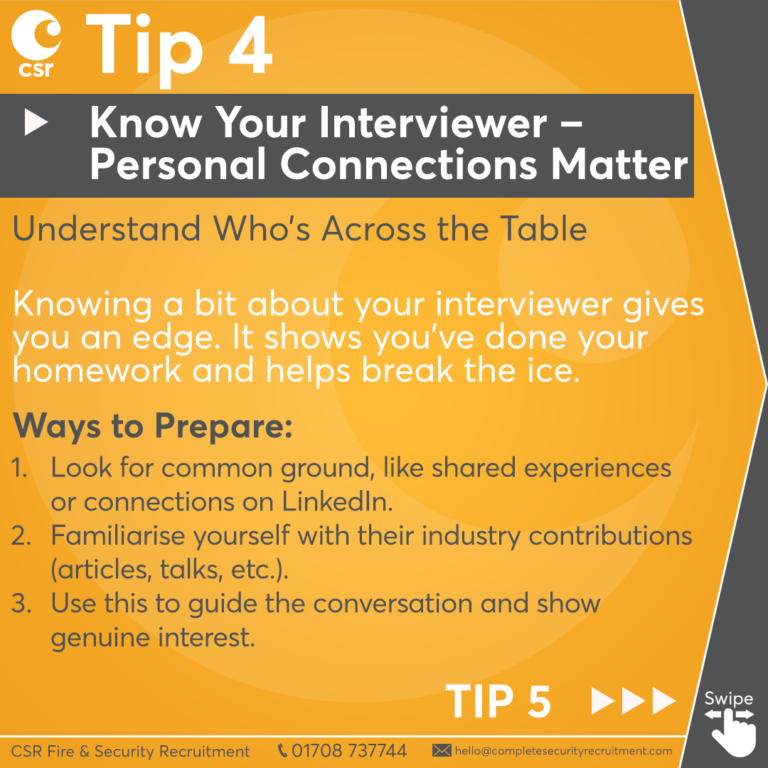
Find Out Who Is Interviewing You
If you know the name of the interviewer, it is worth looking at their background.
Their LinkedIn profile or company team page may tell you:
- Their role
- How long they have been with the business
- Whether they have a technical or commercial background
- Whether they are likely to be your line manager
This can help you understand what kind of conversation to expect.
Be Ready to Explain Why You Want the Role
You will probably be asked some version of:
Why are you looking to move?
or:
Why are you interested in this position?
You do not need a complicated answer.
You might be looking for:
- More technical responsibility
- Better progression
- Larger or more interesting projects
- A different working environment
- More commissioning work
- Less travel
- A move into management
- Better training
- A stronger overall package
Whatever the reason, have a clear and genuine answer.
Think About What the Employer Needs
It is easy to prepare only from your own point of view.
Try to think about the employer as well.
What problem are they trying to solve by hiring someone?
They may need:
- Someone who can work independently
- Strong fault-finding ability
- Experience with a specific system
- Someone comfortable dealing with customers
- Better leadership within the engineering team
- Someone capable of taking ownership of projects
If you understand what they are really looking for, it becomes easier to explain why your experience is relevant.
Prepare Questions to Ask
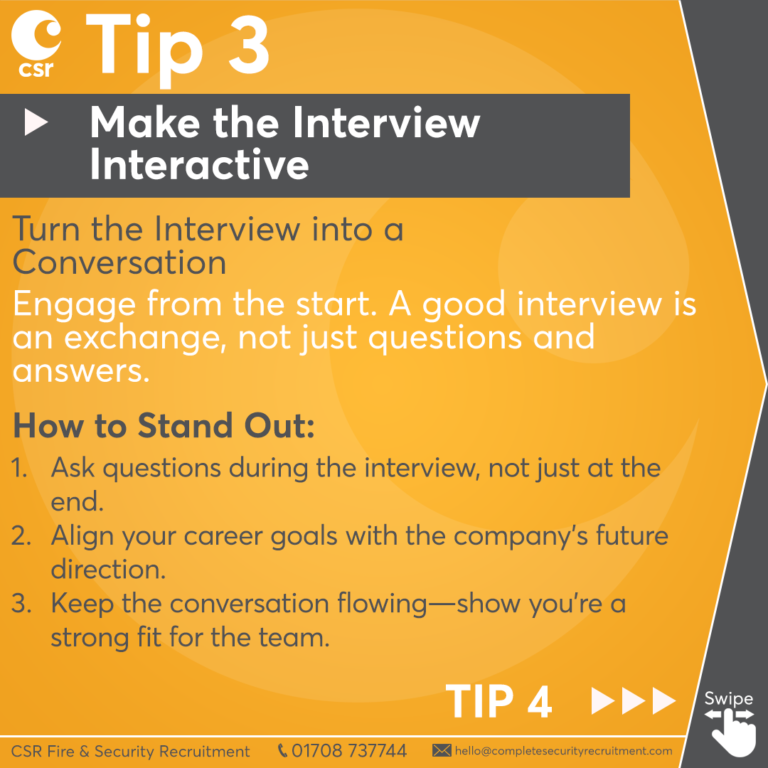
An interview is a two-way conversation.
Prepare a few questions that will help you understand the role properly.
Useful examples include:
- What would you expect me to achieve in the first six months?
- What types of systems would I work with most often?
- What does a typical week look like?
- How large is the engineering team?
- What training is available?
- What progression opportunities are there?
- How is call-out organised?
- What types of customers or sites would I cover?
- Why has the position become available?
Ask questions you genuinely want answered.
Think About Salary Before the Interview
You may not discuss salary at all, but you should still know your position before the interview.
Be clear on:
- Your current basic salary
- Overtime
- Travel time
- Call-out
- Vehicle or car allowance
- Bonus or commission
- Holiday allowance
- Pension
- Any other important benefits
That makes it much easier to compare packages properly if the subject comes up.
It also helps you avoid focusing only on the basic salary when the overall package may be more important.
Prepare the Practical Details
A lot of unnecessary stress can be avoided by sorting the basics in advance.
For an in-person interview:
- Check the address
- Plan your journey
- Allow extra time
- Check parking if relevant
- Know who you are meeting
For a video interview:
- Test the link
- Check your camera and microphone
- Find a quiet location
- Make sure your internet connection is stable
- Join a few minutes early
These things are simple, but they allow you to focus on the actual conversation.
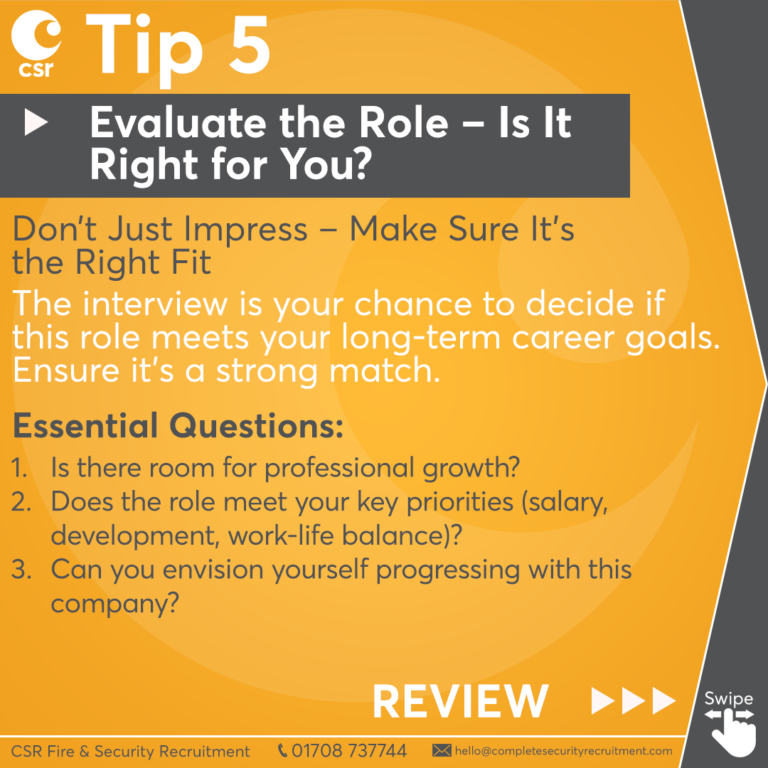
Remember That You Are Assessing the Role Too
The interview is not only about whether the employer wants to hire you.
You also need to decide whether the opportunity is right for you.
Think about what matters most to you, such as:
- Progression
- Technical development
- Working environment
- Travel
- Call-out
- Work-life balance
- Salary and package
- Management style
- Training
- Long-term opportunities
A successful interview should leave both sides with a clearer idea of whether the move makes sense.
Final Interview Preparation Checklist
Before the interview:
- Read the job description again
- Review your CV
- Research the company
- Check who you are meeting
- Prepare relevant examples
- Refresh your technical knowledge
- Prepare questions
- Check the practical details
- Know why you want the role
- Know what you want to learn from the interview
The aim is not to sound rehearsed.
Good preparation should make it easier to have a confident, natural conversation.
Need Help Before Your Interview?
If you are interviewing for a role through Complete Security Recruitment, speak to your consultant beforehand.
We can help you understand the position, the employer and what to expect from the interview process.
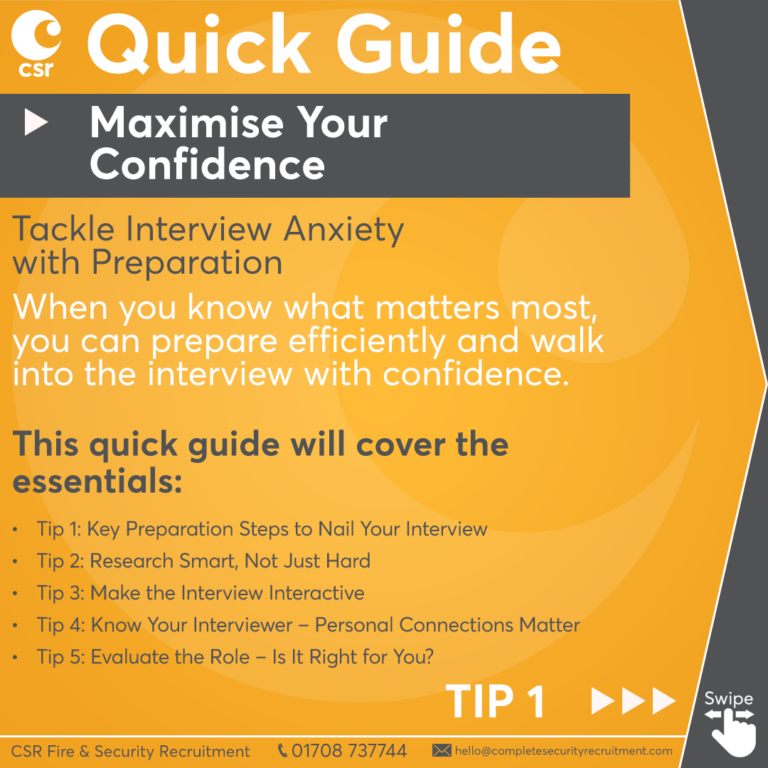
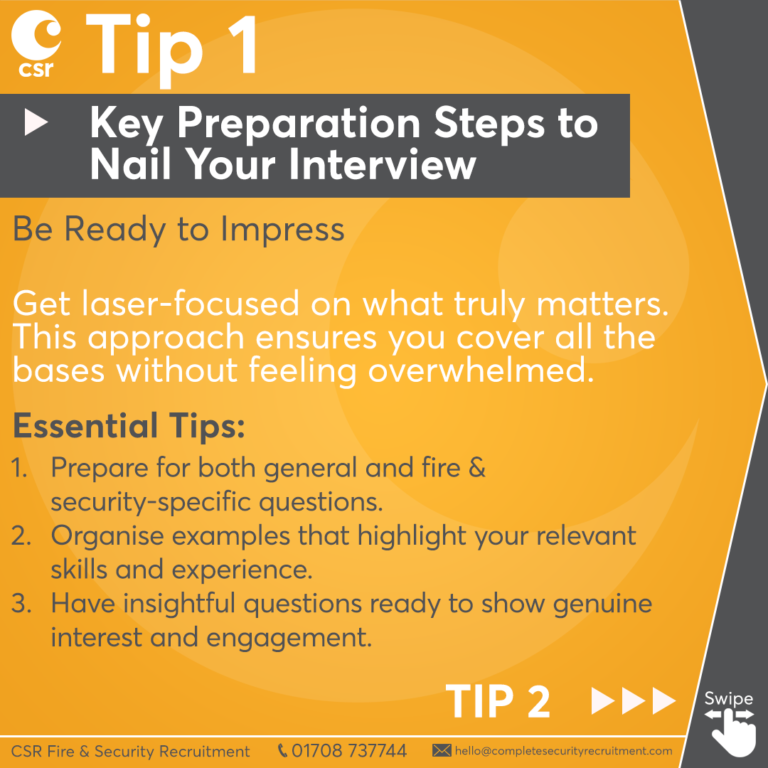
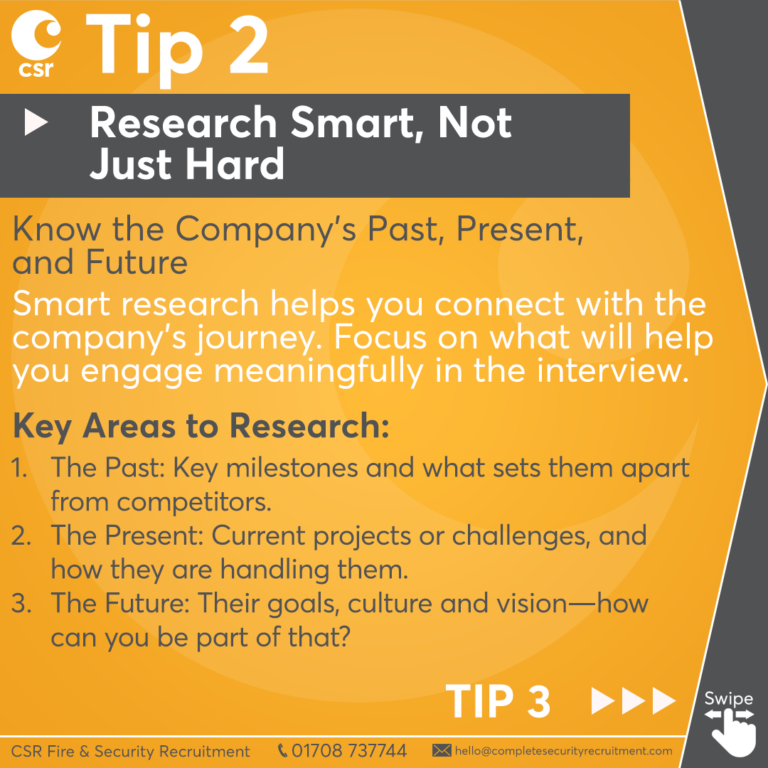
Quick Guide: Interview Preparation

We Can Help You.
Contact Us Today
Whatever your recruitment needs are in the Fire & Security industry, we would love to have a chat about it with you. Pick up the phone & give us a call or contact us on one of the other channels listed here. We look forward to speaking with you!

