Day of Your Interview: How to Make a Strong Impression
By the time interview day arrives, most of the preparation should already be done.
The focus now is on being organised, communicating clearly and giving the interviewer a good understanding of who you are and how you work.
For fire and security roles, employers are often looking for more than just technical ability. They also want to know whether they can trust you with customers, projects, engineers, deadlines and responsibility.
Interview Day Quick Check
Before the interview starts:
- Arrive or join early
- Dress appropriately
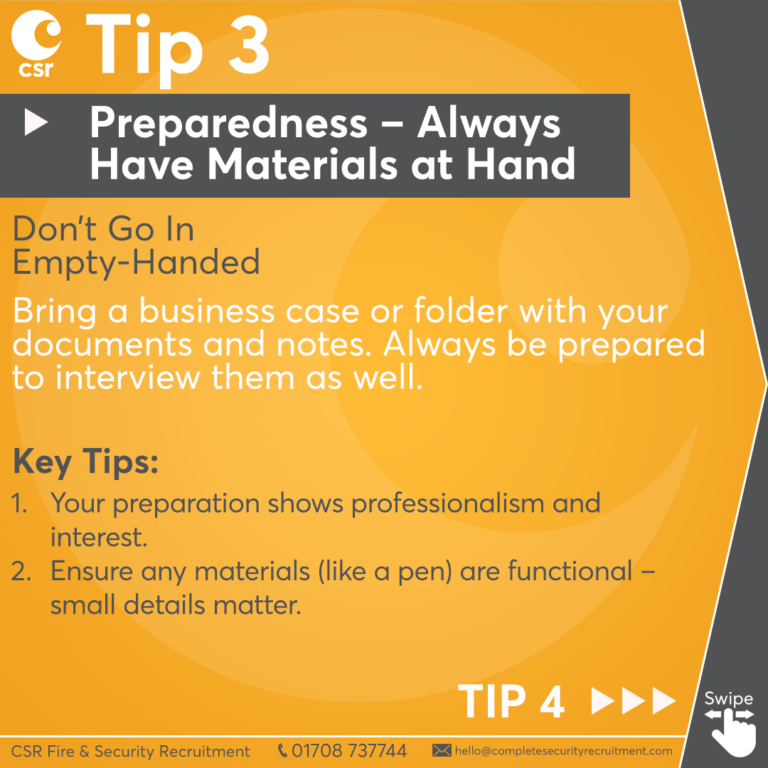
- Have the job description to hand
- Keep your CV nearby
- Know who you are meeting
- Turn your phone off or onto silent
- Be ready to talk through your experience
- Listen carefully to the questions
- Ask questions of your own
- Stay professional from start to finish
The basics sound simple, but they make a difference.
Arrive With Time to Spare
For an in-person interview, aim to arrive in the area early enough that traffic, parking or public transport delays do not create unnecessary stress.
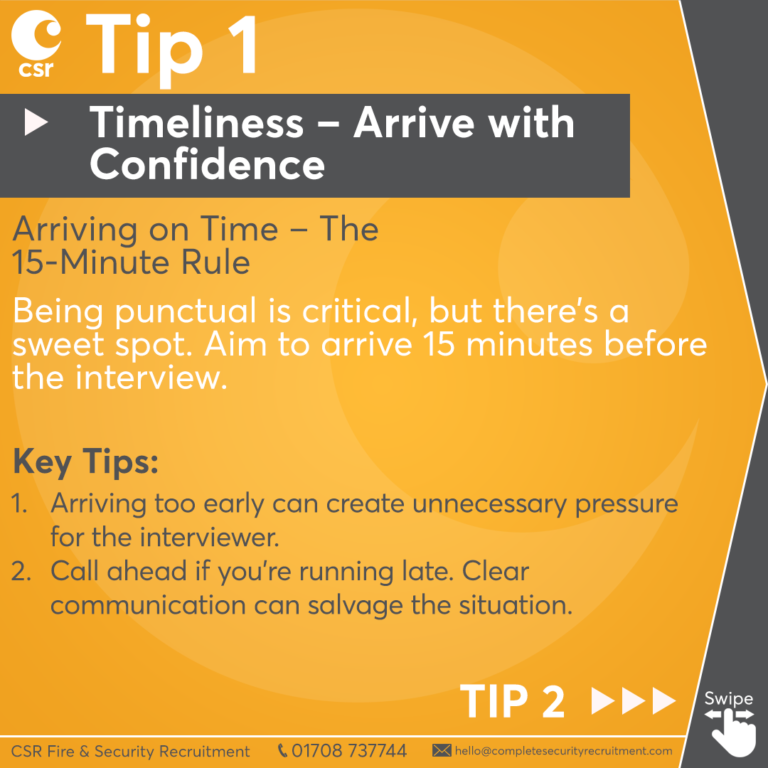
You do not necessarily need to walk into reception 20 minutes early. Around five to ten minutes before the agreed time is usually enough.
If it is a video interview, join the meeting a few minutes before the start time and make sure your camera, microphone and connection are working.
Turning up late without warning can create a poor first impression before the interview has even started.
Dress for the Role
You do not always need to wear a suit.
What matters is that you look clean, presentable and as though you have made an effort.
For office-based management, sales or senior positions, more formal clothing may be appropriate.
For engineering roles, smart casual is often perfectly acceptable unless you have been told otherwise.
If you are coming directly from site, let the recruiter or interviewer know beforehand if that affects what you will be wearing.
First Impressions Matter
Most interviews begin with fairly ordinary conversation.
That still forms part of the overall impression.
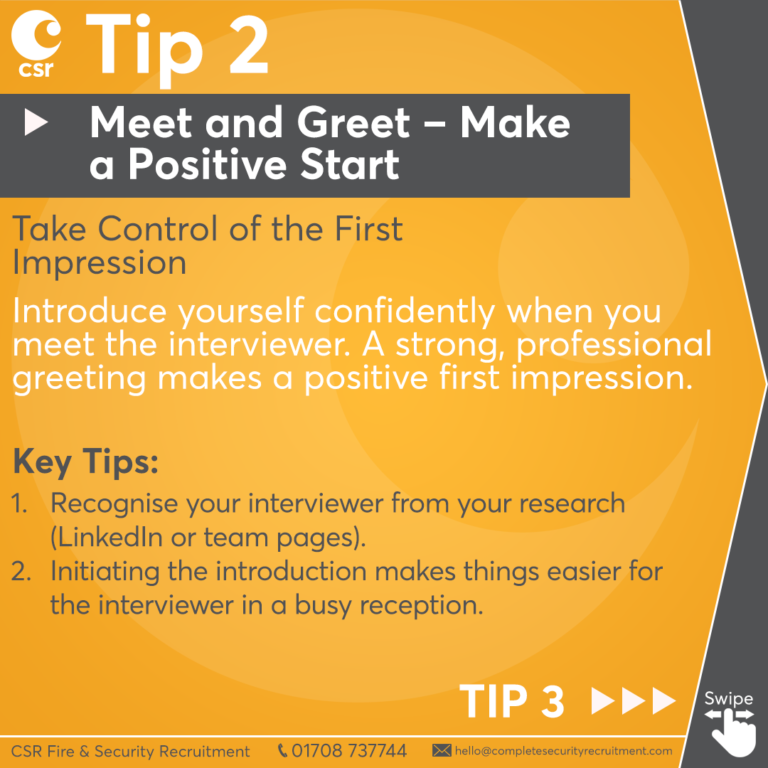
Be polite to everyone you meet, not only the person conducting the interview.
A confident introduction, good manners and a professional attitude go a long way.
You do not need to perform or try to be overly impressive. Just aim to be approachable and engaged.
Listen to the Question
One of the easiest mistakes to make is answering the question you expected rather than the question you were actually asked.
Take a moment to listen.
If you need a few seconds to think, that is fine.
If the question is unclear, ask the interviewer to explain or rephrase it.
It is better to clarify than to give an answer that misses the point.
Keep Your Answers Relevant
Try to answer with enough detail to show your experience without turning every response into a ten-minute story.
If the interviewer asks about fault-finding, explain your process and give a relevant example.
If they ask about leadership, talk about a situation where you actually led, supported or coordinated others.
Relevant examples make answers more believable and easier to understand.
Be Clear About Your Technical Experience
Fire and security interviews often involve detailed conversations about systems and manufacturers.
Be accurate about what you know.
There is a difference between having:
- Installed a system
- Serviced it
- Fault-found on it
- Programmed it
- Commissioned it
- Been formally trained on it
Do not be tempted to exaggerate.
An interviewer with strong technical knowledge will usually recognise very quickly if someone is overstating their experience.
If you are unfamiliar with something, you can still explain related experience and your ability to learn.
What If You Don't Know the Answer?
You are not expected to know everything.
If you do not know the answer to a technical question, say so.
You can still explain how you would approach the problem.
For example:
I haven’t worked directly on that particular system, but I have worked extensively with similar platforms and would normally start by checking…
That demonstrates honesty and problem-solving ability.
Pretending to know something you do not is usually far more damaging.
Explain What You Did, Not Just What the Team Did
Candidates sometimes describe everything as:
“We did…”
That can make it difficult for the interviewer to understand your own contribution.
There is nothing wrong with talking about teamwork, but make sure you also explain:
- What you were responsible for
- What decisions you made
- What problems you solved
- What the outcome was
The interviewer is trying to understand what you would bring to their business.
Talk Positively About Previous Employers
There may be perfectly good reasons why you want to leave your current company.
Even so, avoid turning the interview into a list of complaints.
You can explain that you are looking for better progression, more responsibility, different systems or a change in working environment without heavily criticising your current employer.
A professional answer usually creates a much better impression.
Be Honest About Why You Are Looking to Move
Employers will often want to understand your motivation.
It is fine if salary is one factor, but try to explain the wider reason for the move where there is one.
That could be:
- Career progression
- Better technical development
- More interesting projects
- Less travel
- A different type of employer
- More responsibility
- Better training
- A move into management
The clearer your reason, the easier it is for the employer to decide whether their role actually suits you.
Show That You Can Work With Customers
This is especially important for engineering and service roles.
Technical ability matters, but so does the way you represent the company.
Be ready to talk about:
- Dealing with customers on site
- Explaining faults or delays
- Managing expectations
- Communicating clearly
- Keeping people informed
- Remaining professional when things go wrong
A technically excellent engineer who creates problems with customers is still a problem for the employer.
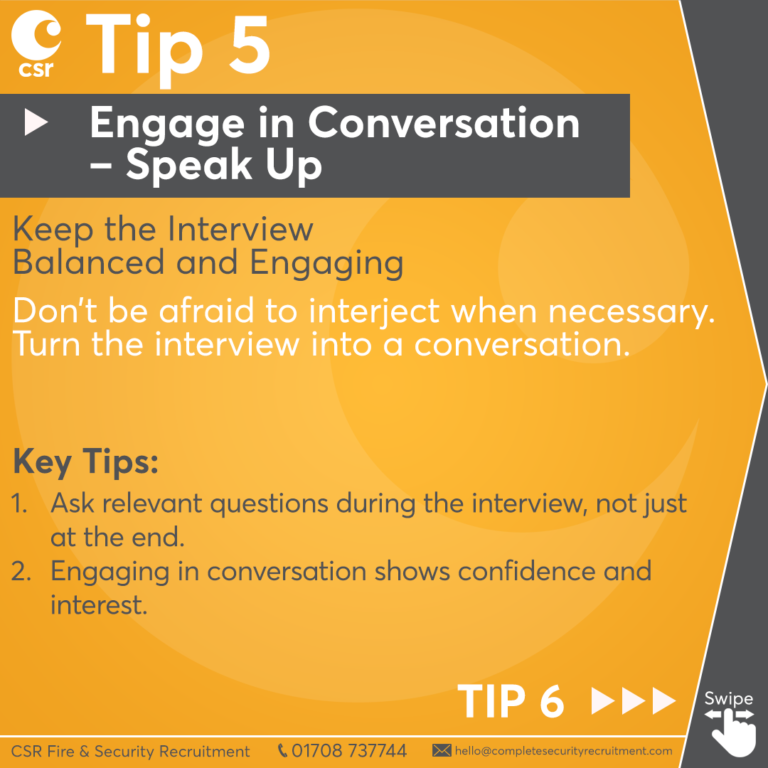
Ask Questions
When the interviewer asks whether you have any questions, try not to say:
“No, I think you’ve covered everything.”
Even if the interview has been detailed, there is normally something useful you can ask.
For example:
- What would success look like in the first six months?
- What types of projects would I be working on?
- What systems does the company work with most frequently?
- How is the team structured?
- What training is available?
- What progression opportunities are there?
- What are the next steps in the interview process?
Good questions help you understand the role and show that you are genuinely considering the opportunity.
Discuss Salary Professionally
If salary comes up, be straightforward.
You should already know your current package and what you would realistically consider for your next move.
Try to think about the entire package rather than just the basic salary.
Depending on the role, that might include:
- Vehicle or car allowance
- Overtime
- Travel time
- Call-out payments
- Bonus or commission
- Holiday allowance
- Pension
- Training
- Working hours
If you are applying through a recruiter, much of this should already have been discussed before the interview.
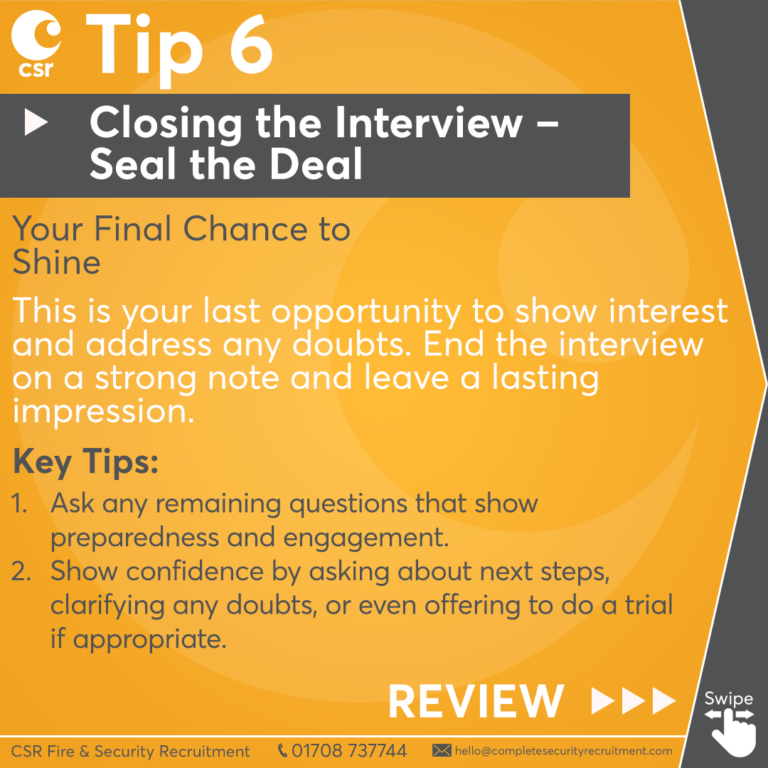
At the End of the Interview
Before leaving, make sure you understand what happens next.
You might ask:
“What are the next steps from here?”
You can also confirm that you remain interested in the role if that is the case.
A simple:
“Thanks for your time. I’ve enjoyed hearing more about the role and I’m definitely interested.”
is enough.
You do not need an elaborate closing statement.
Final Interview Day Checklist
On the day:
- Be on time
- Be presentable
- Listen carefully
- Answer honestly
- Use relevant examples
- Be clear about your technical ability
- Explain your own contribution
- Stay positive about previous employers
- Ask sensible questions
- Understand the next step
You do not need to deliver a perfect performance.
The aim is to have a professional conversation that gives both you and the employer enough information to decide whether the opportunity is a good match.
What Happens Next?
Once the interview is over, the next step is to review how it went, give feedback and understand what happens if the employer wants to progress.
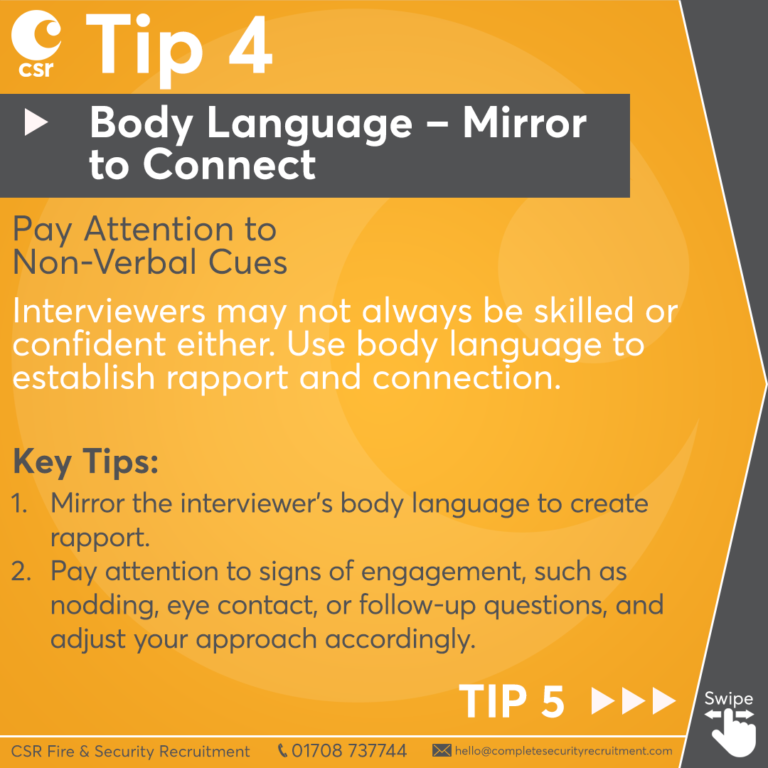
Quick Guide: Winning Behaviours That Get You Hired
We Can Help You.
Contact Us Today
Whatever your recruitment needs are in the Fire & Security industry, we would love to have a chat about it with you. Pick up the phone & give us a call or contact us on one of the other channels listed here. We look forward to speaking with you!

