Negotiating Salary and Evaluating a Job Offer
Getting an offer is the outcome everyone wants, but it is still worth taking the time to look at the full picture before saying yes.
A good offer is not just about the basic salary.
For fire and security roles, things like overtime, travel time, vehicle, call-out, location, working hours, progression and training can make a significant difference to the overall value of a job.
Offer Quick Check
Before accepting an offer, check:
- Basic salary
- Overtime rates
- Travel time payments
- Call-out arrangements
- Vehicle or car allowance
- Bonus or commission
- Holiday allowance
- Pension
- Working hours
- Location and travel expectations
- Training
- Progression opportunities
- Notice period
- Probationary terms
It is much easier to make a good decision when you compare the whole package rather than one number.
Start With the Basic Salary
The basic salary is obviously important, but it should not be looked at in isolation.
A higher basic salary can sometimes be offset by:
- More travel
- Less overtime
- Unpaid travel time
- More call-out
- Longer working hours
- Lower holiday allowance
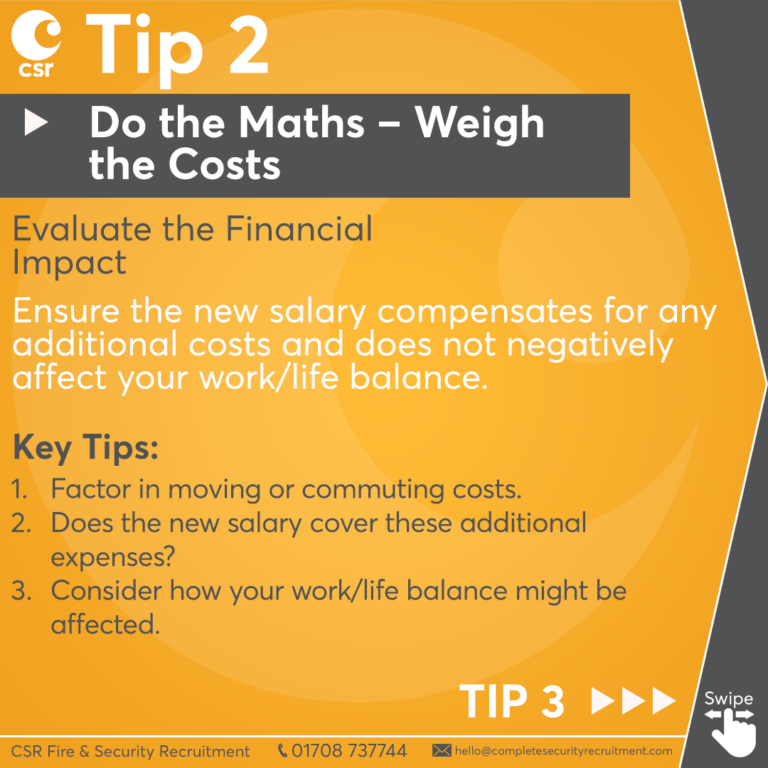
- Greater commuting costs
Equally, a slightly lower basic salary may still result in a better overall package.
The important thing is to understand what you are actually being offered.
Look at the Total Package
Depending on the role, the package may include:
- Company vehicle
- Car allowance
- Fuel arrangements
- Overtime
- Travel time
- Call-out payments
- Bonus
- Commission
- Pension contributions
- Private healthcare
- Training
- Additional holiday
- Tools or equipment
Try to put a realistic value on these where possible.
For example, a company vehicle may be worth considerably more to you than a small increase in basic salary if it removes personal motoring costs.
Think About Travel and Commuting
Travel can have a big impact on how attractive a role really is.
Think about:
- Where you will normally start and finish your day
- How much driving is expected
- Whether travel time is paid
- Whether you cover a fixed area or work nationally
- Staying away requirements
- Fuel arrangements
- Parking and congestion costs where relevant
The difference between a 30-minute commute and a two-hour journey each way can quickly outweigh a salary increase.
Understand Overtime and Call-Out
Overtime can significantly change the value of an engineering role.
Before accepting, make sure you understand:
- Whether overtime is available
- Whether it is compulsory
- The overtime rate
- When overtime starts
- Whether travel time counts
- How often call-out occurs
- Standby payments
- Call-out rates
- Minimum call-out payments
If overtime is being presented as an important part of the overall earning potential, ask enough questions to understand how realistic those earnings actually are.
Think About Progression
A good career move should not only work on day one.
Consider what the role may allow you to do next.
That could include:
- Manufacturer training
- Moving into commissioning
- Project management
- Technical leadership
- Service management
- Sales
- Design
- Senior engineering roles
Ask how progression actually works within the business.
A vague promise of “plenty of opportunities” is less useful than understanding what routes have genuinely been available to other employees.
Consider Training and Development
Training can add real long-term value.
Depending on the role, this might include:
- Manufacturer courses
- Technical qualifications
- Fire alarm training
- Networking
- Project management qualifications
- Leadership development
If the role gives you experience or qualifications that will strengthen your career over the next few years, that should form part of your decision.
Compare the Working Environment
Salary matters, but so does the way the company operates.
Think about what you learned during the interview.
Ask yourself:
- Did the people seem organised?
- Did expectations sound realistic?
- Did the role match the original description?
- Did the manager seem supportive?
- Did you understand how the team works?
- Can you see yourself working there?
A slightly higher salary is unlikely to compensate for a role you already have concerns about.
Should You Negotiate the Offer?
You can negotiate, but there should be a reason for doing so.
If the offer is below what was discussed, below your expectations or does not properly reflect your experience, it is reasonable to have a conversation.
Keep it professional.
For example:
Thank you for the offer. I’m very interested in the role. Based on my current package and the level of responsibility involved, I was hoping we could get closer to £45,000. Is there any flexibility around the basic salary?
That is much more effective than simply saying:
I want more money.
If the basic salary cannot move, there may sometimes be flexibility elsewhere in the package.
Know What You Would Accept
Before negotiating, decide what actually matters to you.
There may be three numbers worth thinking about:
Ideal
What would make the move particularly attractive.
Realistic
What you believe is fair for the role and your experience.
Minimum
The point below which the move no longer makes sense.
Knowing this beforehand makes the conversation much easier.
Do Not Negotiate Just for the Sake of It
There is sometimes an assumption that every job offer should be negotiated.
That is not necessarily true.
If the employer has offered exactly what you asked for and you are happy with the package, there may be little benefit in trying to push it further purely because you think you are supposed to.
Negotiation should have a purpose.
What If You Receive More Than One Offer?
This is where comparing the entire opportunity becomes particularly important.
Do not automatically choose the highest salary.
Compare:
- Role
- Responsibilities
- Salary
- Package
- Travel
- Working hours
- Training
- Progression
- Company
- Management
- Stability
- Long-term career value
It can help to physically write the two offers down side by side.
That often makes the differences much clearer.
Be Careful With Counteroffers
Once you resign, your current employer may offer you more money to stay.
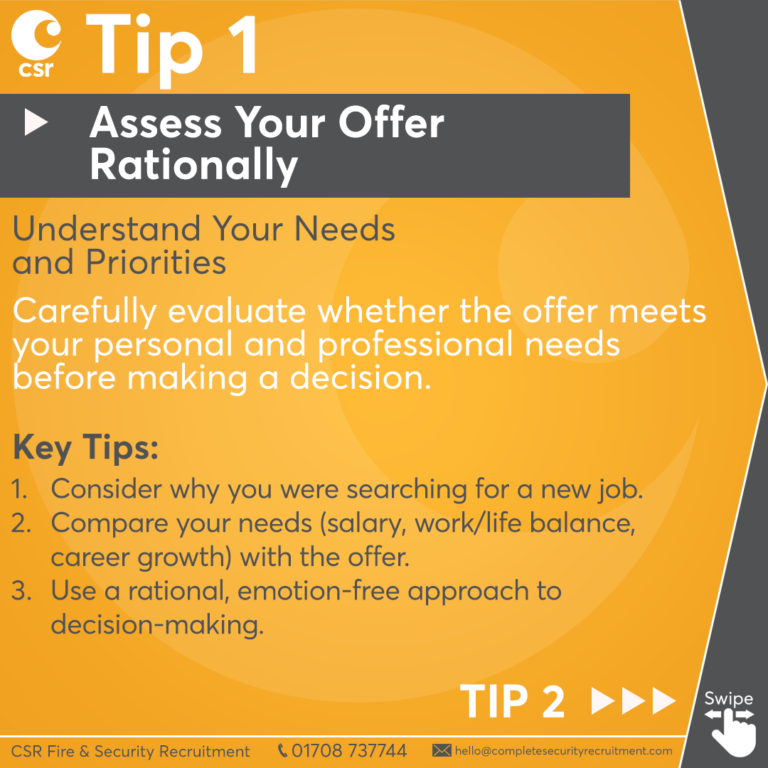
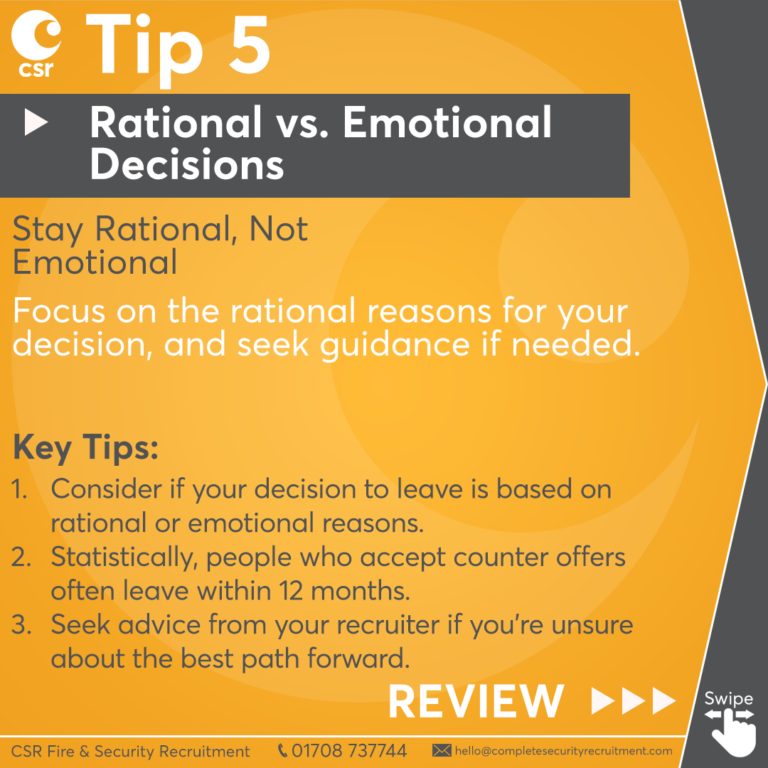
Before accepting, think carefully about why you started looking in the first place.
If your main reason was purely financial, a counteroffer may genuinely address the issue.
If the reasons involved:
- Lack of progression
- Management
- Working environment
- Travel
- Hours
- Training
- Responsibility
- Type of work
then more money may not solve the original problem.
A counteroffer should be evaluated in exactly the same way as any other offer.
Get Everything Clear Before You Resign
Before handing in your notice, make sure you understand the offer.
Ideally, you should have written confirmation covering the main terms.
If something is unclear, ask.
It is far better to resolve questions about salary, vehicle, working hours or travel before you resign than afterwards.
Think Beyond the First Year
A useful way to assess an offer is to ask:
Where could this job put me in two or three years?
A move that gives you stronger technical experience, better training or greater responsibility may have considerably more long-term value than a small immediate salary increase.
That does not mean salary should be ignored.
It simply means it should be considered alongside the direction of your career.
Final Offer Checklist
Before saying yes:
- Understand the full package
- Check travel and working hours
- Understand overtime and call-out
- Consider training
- Look at progression
- Think about the working environment
- Decide whether the move solves the reasons you wanted to leave
- Negotiate if there is a genuine reason
- Get the important details confirmed
- Think about the longer-term career value
The best offer is the one that works for you overall, not necessarily the one with the biggest headline number.
Need Help Evaluating an Offer?
If you receive an offer through Complete Security Recruitment, speak to your consultant before making a decision.
We can help you compare the package, clarify any outstanding questions and talk through the wider career move.
Quick Guide: Evaluating An Offer




We Can Help You.
Contact Us Today
Whatever your recruitment needs are in the Fire & Security industry, we would love to have a chat about it with you. Pick up the phone & give us a call or contact us on one of the other channels listed here. We look forward to speaking with you!

