What Does A Fire Alarm Designer Do? Skills, Responsibilities And Career Options
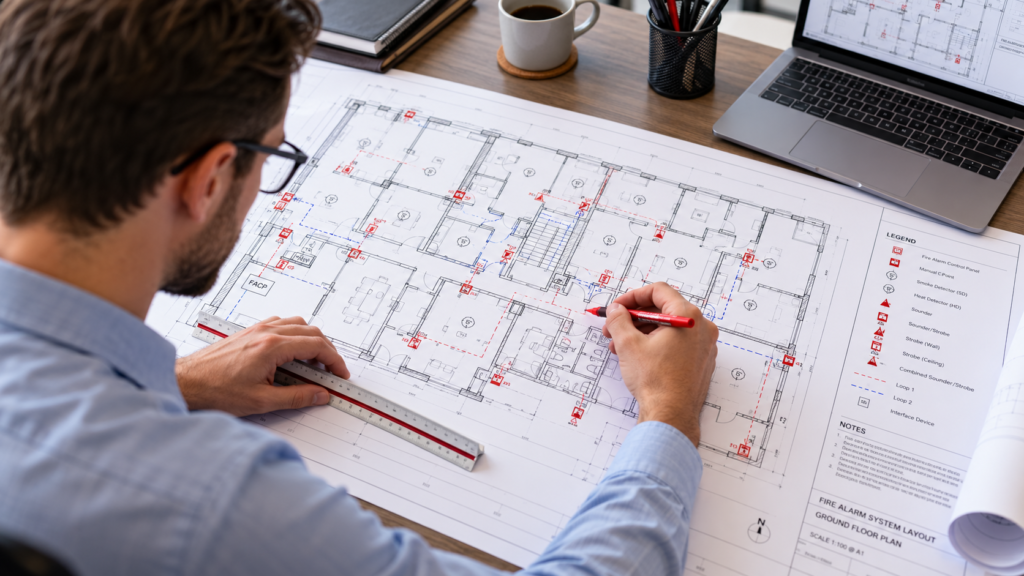
A fire alarm system has to work long before anyone starts installing cable or fitting detectors.
Someone needs to understand the building, assess what the system needs to achieve, interpret the specification and relevant standards, decide where devices should be positioned and produce a design that can actually be installed.
That is where the fire alarm designer comes in.
It is a specialist role that sits between engineering, compliance and project delivery. Good fire alarm designers need strong technical knowledge, but they also need to understand buildings, drawings, standards and how their decisions will work in the real world once engineers arrive on site.
For experienced fire alarm engineers, moving into design can also provide a completely different route for career progression without leaving the technical side of the industry behind.
What Does A Fire Alarm Designer Actually Do?
A fire alarm designer is responsible for turning the requirements of a project into a workable fire detection and alarm system design.
That usually starts with understanding what is required.
Depending on the project, the designer may be working from architectural drawings, a fire strategy, a consultant’s specification, client requirements, site survey information or a combination of all of them.
From there, they need to determine how the fire alarm system should operate and how it can be delivered correctly.
Typical responsibilities can include:
- Reviewing specifications and building drawings
- Understanding the required fire alarm category
- Positioning detectors, manual call points, sounders and visual alarm devices
- Planning loops and circuits
- Considering interfaces with other building systems
- Producing system drawings
- Preparing equipment schedules
- Calculating system requirements
- Developing cause-and-effect information
- Reviewing designs against relevant standards
- Answering technical queries from project and installation teams
- Updating drawings when projects change
- Producing or supporting final record drawings
Exactly where the designer’s responsibility starts and finishes will depend on the company and the project.
In some businesses, the designer will be involved from the earliest survey or tender stage. In others, they receive an agreed specification and produce the detailed system design from that information.
On larger projects, several people may contribute to the process.
Fire Alarm Design Is More Than Putting Devices On A Drawing
Looking at a completed fire alarm drawing can make the job appear relatively straightforward.
There is a floor plan, symbols show where the devices are positioned and lines may indicate how the system is connected.
The difficult part is everything that went into deciding what should appear on that drawing.
A designer needs to think about the building itself.
How is it being used? What needs to be protected? What category of system has been specified? Are there areas where particular detection methods may be unsuitable? Are there environmental factors that could cause unwanted alarms?
Then there is the practical side.
Where can devices realistically be installed? Are there ceiling voids, unusual ceiling heights or architectural features that affect detection? How will engineers access areas during installation and future maintenance? Where will cables run? What other systems will the fire alarm need to communicate with?
A design may look perfectly neat on a computer screen and still create major problems when somebody tries to install it.
The best designers understand that difference.
What Standards Does A Fire Alarm Designer Need To Understand?
Standards are an important part of fire alarm design because these are life-safety systems.
For commercial and non-domestic fire alarm systems in the UK, designers will commonly work with the requirements and recommendations contained within BS 5839-1.
Knowing that the standard exists is obviously not enough.
A competent designer needs to understand how it applies to real buildings and real projects.
That can include areas such as detector coverage, manual call points, alarm devices, zoning, system categories, power supplies and the documentation associated with the design.
There may also be other requirements affecting a particular project, including the fire strategy, building specifications, client standards or requirements associated with particular environments.
This is one reason experienced fire alarm designers can become so valuable.
The job is not simply about remembering rules. It involves applying technical knowledge and judgement to different situations.
For anyone considering a technical specialism, this is a good example of why Choosing A Specialism In Fire And Electronic Security can lead towards roles that require much deeper knowledge of one particular discipline.
Does A Fire Alarm Designer Need Engineering Experience?
Not every fire alarm designer has followed exactly the same career path, but practical engineering experience can be extremely useful.
An engineer who has spent years installing, servicing or commissioning fire alarm systems already understands many things that are difficult to learn purely from drawings.
They know what happens on site.
They understand the problems caused by inaccessible devices, poor cable routes, incomplete information and designs that do not reflect the building.
They also understand the equipment itself.
That means when they look at a proposed design, they are more likely to think about whether it will actually work rather than simply whether it looks correct on the drawing.
Commissioning experience can be particularly useful because commissioning engineers see complete systems operating as a whole. They are often dealing with cause and effect, interfaces and problems that only become apparent when different parts of the system are brought together.
However, engineering experience by itself does not automatically make someone a designer.
Design requires another set of skills.
What Skills Does A Good Fire Alarm Designer Need?
Technical knowledge is the obvious starting point, but the strongest designers usually combine several different abilities.
Fire Alarm System Knowledge
A designer needs to understand the systems they are designing.
That includes the principles of detection, alarm devices, control equipment, interfaces, circuits and system operation.
Manufacturer knowledge can also be valuable, particularly where the designer is working with more complex addressable systems.
Understanding Of Standards
Fire alarm designers need to be comfortable working with the standards and requirements relevant to their projects.
More importantly, they need to understand how those requirements translate into an actual design rather than treating compliance as a box-ticking exercise.
Drawing And CAD Skills
Modern fire alarm design is heavily drawing-based.
Depending on the employer and type of project, designers may use AutoCAD or other design and building information software.
Someone moving from an engineering role may therefore need to develop their drawing skills alongside their fire alarm knowledge.
Attention To Detail
Small mistakes at design stage can become expensive problems later.
An incorrect device, missing interface or overlooked area can affect installation, commissioning and handover.
A good designer therefore needs to be methodical.
Communication
Designers do not work in isolation.
They may need to speak with clients, consultants, project managers, engineers and other contractors.
They also need to be able to explain why something has been designed in a particular way and respond when somebody challenges or changes part of the design.
Practical Thinking
This is perhaps one of the most important skills.
A technically correct design still needs to work inside a real building.
Designers who understand what engineers will actually encounter on site can often identify problems before they become expensive changes during installation.
What Qualifications Does A Fire Alarm Designer Need?
There is not one single qualification that automatically turns somebody into a competent fire alarm designer.
Employers tend to look at a combination of relevant qualifications, training, practical experience, knowledge of standards and proven design ability.
The requirements can also depend heavily on the organisation and the type of projects being delivered.
Competence matters more than simply collecting certificates.
For someone trying to move from engineering into design, training around fire alarm design and the relevant standards can clearly be valuable. So can qualifications that demonstrate a deeper level of technical understanding.
However, employers will still want to know whether you can apply that knowledge.
- Can you read drawings properly?
- Can you understand a specification?
- Can you identify something that does not make sense?
- Can you produce a design that an installation team can actually follow?
We have looked more broadly at this in What Qualifications Actually Matter In Fire And Security In 2026? because the value of a qualification often depends on what somebody can actually do with the knowledge behind it.
How Do You Move From Fire Alarm Engineering Into Design?
For an experienced fire alarm engineer, moving into design does not necessarily require starting again.
A lot of the technical foundation may already be there.
The areas that need developing are often the parts of the role engineers encounter less frequently, such as CAD, formal design processes, detailed drawing work and applying standards specifically from a designer’s perspective.
Some engineers begin making the transition by becoming more involved in surveys or small works designs.
Others move into project engineering positions where they start reviewing drawings, solving design issues and working more closely with dedicated designers.
A commissioning engineer might already be involved in cause-and-effect work and system configuration, giving them another route towards design.
It does not have to happen overnight.
In fact, gradually increasing design responsibility while retaining access to experienced designers can be one of the most useful ways to make the move.
What Is The Difference Between A Fire Alarm Designer And A Project Engineer?
This is another area where company job titles can make things confusing.
A fire alarm designer is normally focused primarily on the technical design of the system.
A project engineer may have wider responsibility for helping deliver the project.
That could include surveys, technical support, design review, equipment selection, site meetings, commissioning or supporting installation teams.
There can be significant overlap.
In a smaller company, the same person might survey a building, design the system, support the installation and then help commission it.
A larger organisation may have dedicated designers producing drawings while project engineers deal with technical issues during delivery.
This is why the actual responsibilities listed within a vacancy matter more than the job title by itself.
Does A Fire Alarm Designer Spend Much Time On Site?
Potentially, although generally less than an installation or service engineer.
Some designers are largely office-based and work from information provided by other teams.
Others regularly carry out surveys, attend project meetings or visit sites when an issue cannot be resolved from drawings alone.
There are advantages to both.
Office-based design can appeal to experienced engineers who want to reduce the amount of travelling or physical site work they do.
However, maintaining some exposure to live projects can also be extremely useful.
Buildings have a habit of being more complicated in reality than they appear on a drawing.
Is Fire Alarm Design A Good Career Move?
It can be an excellent option for someone who enjoys the technical side of fire alarm systems but wants to move away from spending every day on the tools.
It is particularly well suited to people who enjoy solving technical problems, working through detailed information and understanding why systems operate the way they do.
It can also provide a route towards more senior positions.
Depending on the business, progression could include:
- Senior Fire Alarm Designer
- Design Engineer
- Senior Design Engineer
- Design Manager
- Technical Manager
- Systems Specialist
- Technical Consultant
There are also opportunities to move from design into project management or wider technical leadership.
The important point is that moving away from the tools does not necessarily mean moving away from technical work.
For some engineers, design actually allows them to go deeper technically.
Are Experienced Fire Alarm Designers Valuable To Employers?
Strong designers can be extremely valuable because good design affects almost everything that happens afterwards.
A well-designed project can make installation easier, reduce changes, help commissioning run more smoothly and prevent unnecessary problems further down the line.
Poor design can do the opposite.
That is why experience matters.
Someone who can independently interpret requirements, identify potential issues and produce accurate designs gives an employer much more than somebody who can simply operate CAD software.
The same principle applies across the wider fire and security industry. People tend to become more valuable when their knowledge allows them to solve more difficult problems and take greater responsibility, which we explore further in What Makes A Fire And Security Engineer Worth More Than The Average Salary?.
Should You Consider A Career In Fire Alarm Design?
If you already work with fire alarms and enjoy the technical side of the job, design can be a very logical direction to explore.
You do not necessarily need to dislike engineering to want to make the move.
You might simply prefer solving problems before a project reaches site rather than after installation has started.
For an experienced engineer, the combination of practical knowledge and new design skills can be particularly powerful. You already know what a good installation looks like. The next step is learning how to make sure the information given to the installation team allows them to achieve it.
The role will not suit everybody.
If you enjoy being on the road, fault-finding on live systems and spending most of your working day physically dealing with equipment, moving into an office-heavy design position may not appeal.
But if you enjoy technical detail, drawings, standards and working out how a system should fit together, fire alarm design can offer a long-term specialist career without leaving the industry you already know.
Looking For Your Next Fire Alarm Design Role?
Fire alarm design sits at the heart of successful project delivery.
The strongest designers combine knowledge of standards with genuine understanding of how fire alarm systems work in practice. For engineers who want to develop that knowledge further, it can provide a route into increasingly technical and senior positions.
At Complete Security Recruitment, we work exclusively within the fire and security industry and regularly speak with companies recruiting across engineering, design, projects and technical management.
Whether you are already working as a fire alarm designer or are an experienced engineer considering design as your next career move, we can help you understand what opportunities are available local to you.
Speak to the Complete Security Recruitment team on 01708 737744.
Every Job is Easier if You Have the Right Tools