Why Are Multi-Skilled Fire And Security Engineers Becoming More Valuable In 2026?
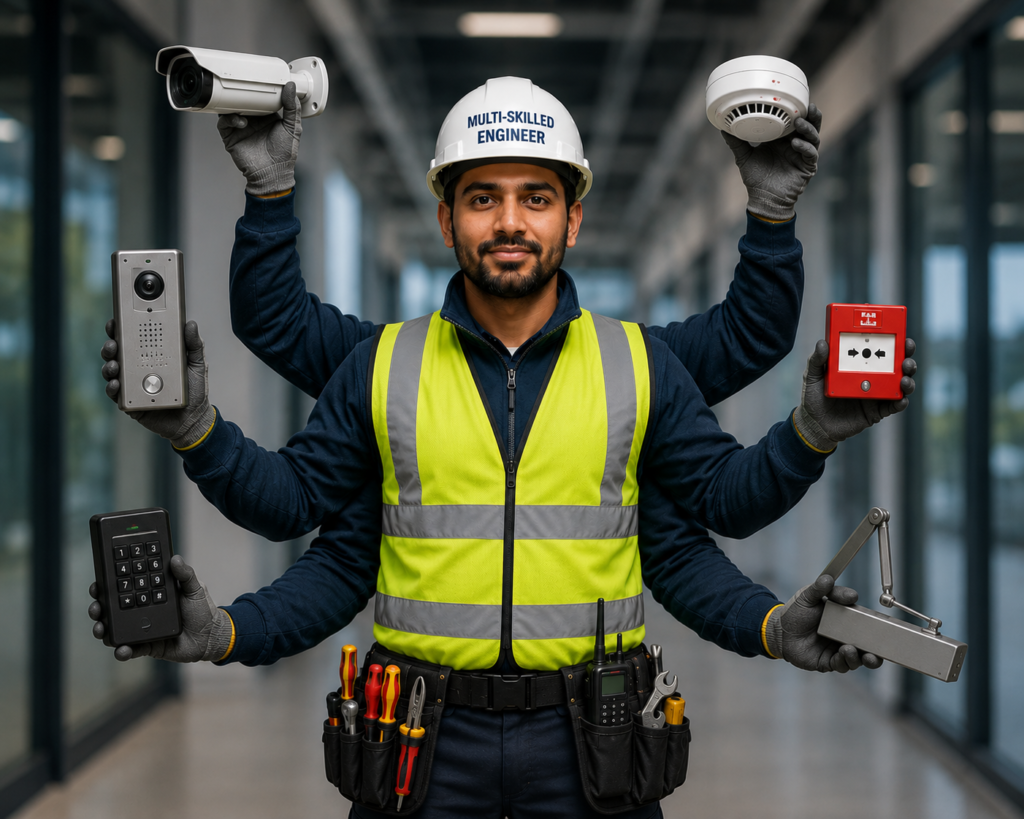
The role of a fire and security engineer has changed significantly over the last few years. Employers are no longer only looking for engineers who can work on one type of system in isolation. Increasingly, they want people who understand how fire alarms, CCTV, access control, intruder alarms and wider life safety systems interact across commercial sites.
This does not mean every fire and security engineer needs to become an expert in every area. Specialism still matters. However, in 2026, engineers with broader technical ability are becoming more valuable because modern sites rarely operate as separate systems anymore.
A client may need one engineer who can service fire alarms, investigate an access control fault, understand CCTV integration and communicate confidently with site managers. That flexibility can make a real difference to employers, contractors and candidates.
The Fire And Security Engineer Role Is Becoming Broader
A modern fire and security engineer is often expected to work across multiple systems, especially in service, maintenance, small works and commissioning roles. While some companies still split fire and security teams, many employers now prefer engineers who can support a wider range of systems.
This is partly because clients want quicker responses. If a business has an issue with CCTV, access control and an alarm panel on the same site, it is more efficient to send one capable engineer than arrange multiple visits.
This is also why engineers who understand fire alarm, CCTV and access control specialisms can be so attractive to employers. They are not just ticking more boxes. They are helping businesses deliver better service, reduce delays and keep clients happy.
Why Employers Value Multi-Skilled Engineers
Employers value multi-skilled engineers because they bring flexibility. A fire and security engineer who can work across several disciplines can be deployed more easily, support more contracts and handle a wider range of callouts.
This matters in a market where skilled engineers are already difficult to find. Businesses do not always have the luxury of building teams around very narrow skill sets. They need people who can adapt.
For employers, multi-skilled engineers can help with:
- Reducing repeat site visits
- Covering more service calls
- Supporting mixed-system contracts
- Improving first-time fix rates
- Helping junior engineers develop
- Reducing pressure on specialist teams
From a hiring perspective, a strong multi-skilled fire and security engineer can often stand out quickly because they solve more problems for the business.
Does Being Multi-Skilled Increase Salary Potential?
In many cases, yes. Salary is still affected by location, experience, qualifications, callout, overtime, company size and the systems you can work on. However, broad technical ability can strengthen your position when negotiating pay or moving roles.
An employer may pay more for an engineer who can confidently handle fire alarms, CCTV, access control and intruder systems because that person offers more operational value.
This is especially true when the engineer can also work independently, manage clients well and handle complex sites. Technical range is valuable, but it becomes much more powerful when combined with reliability, communication and good fault-finding ability.
If you are benchmarking your current package, it is worth looking at fire and security engineer salary UK information and comparing it against your actual skill set. Two engineers with the same job title may not have the same market value if one can work across a much wider technical range.
Multi-Skilled Does Not Mean Knowing Everything
There is a common mistake engineers make when thinking about broadening their skills. They assume being multi-skilled means becoming an expert in every product, panel and system.
It does not.
A strong multi-skilled engineer usually has a solid base across key disciplines, with deeper knowledge in one or two areas. For example, you may be strongest on fire alarms but comfortable with CCTV and access control. Or you may come from a security background but have built strong fire alarm servicing experience.
That balance can be ideal. Employers often want engineers who can handle a broad workload but still bring a technical strength to the team.
The question is not whether you should specialise or broaden. The better question is: what combination of skills makes you more useful, employable and valuable?
Specialising Still Has Value
Specialist engineers are still important. In fact, some of the strongest career paths come from deep expertise in a specific area such as fire alarms, enterprise access control, CCTV analytics, commissioning or design.
The difference in 2026 is that employers increasingly like specialists who understand the wider environment around their specialism. A fire alarm specialist who understands access control interfaces, cause and effect, monitoring and site integration may be more valuable than someone who only works within a narrow technical lane.
That is why choosing a fire and electronic security specialism should not be viewed as limiting. Done properly, specialism gives you depth, while broader awareness gives you flexibility.
Project Demands Are Driving The Shift
Modern projects are more connected than they used to be. Commercial buildings often involve multiple systems that need to work together. Fire alarms may interact with access control. CCTV may link into wider security platforms. Intruder systems may form part of a larger monitoring setup.
This creates more demand for engineers who can understand the full site picture.
Project managers, commissioning teams and service departments all benefit from engineers who can see beyond one system. It helps with planning, troubleshooting and communication between teams.
A fire and security engineer who can spot how one system affects another can prevent delays and reduce confusion on site. That is a valuable skill, especially on larger commercial or high-pressure projects.
Why Multi-Skilled Engineers Have More Career Options
One of the biggest benefits of becoming multi-skilled is career choice. Engineers with broader technical ability often have access to more roles because they are not limited to one narrow type of vacancy.
They may be suitable for:
- Service engineer roles
- Small works roles
- Installation roles
- Commissioning roles
- Lead engineer positions
- Technical support roles
- Project engineering roles
- Subcontract opportunities
This makes it easier to move between companies, progress into senior roles or shift towards better-paid work.
For engineers thinking long term, broadening your skill set can support a stronger fire and security career because it gives you more routes to explore as your priorities change.
Subcontract Flexibility Is A Major Factor
Multi-skilled engineers can also be attractive in the subcontract market. Contractors are often brought in to solve immediate problems, support busy projects or cover urgent gaps. The more useful you are across different systems, the easier it can be to stay consistently booked.
A subcontractor who can handle fire alarms only may still do very well if demand is strong. However, a subcontractor who can cover fire, CCTV, access control and intruder work may have more options across different clients and projects.
This does not mean every contractor should try to do everything. Quality still matters. But being able to say yes to more types of work can improve flexibility and earning potential.
How Engineers Can Broaden Their Skills Sensibly
The best way to become more multi-skilled is to build gradually. Trying to learn everything at once usually leads to shallow knowledge. A better approach is to start from your strongest area and add skills that naturally connect to it.
For example, a fire alarm engineer may start by improving knowledge of access control interfaces or disabled refuge systems. A CCTV engineer may build stronger access control or networking knowledge. A security engineer may add fire alarm servicing experience where training and supervision are available.
Good routes include manufacturer training, shadowing experienced engineers, asking for mixed-system jobs, building fault-finding knowledge and being honest about what you can and cannot do.
The most valuable engineers are not the ones who pretend to know everything. They are the ones who keep learning and know how to solve problems properly.
Should You Specialise Or Become More Multi-Skilled?
There is no single correct answer. Some engineers will earn more and progress faster by becoming highly specialised. Others will build stronger careers by becoming broader and more flexible.
The right route depends on your experience, confidence, location, current employer, preferred work type and long-term goals.
If you enjoy deep technical work, complex systems and becoming the go-to person in one area, specialism may suit you. If you enjoy variety, problem-solving and working across different environments, becoming more multi-skilled may be the better route.
For many engineers, the strongest position is a blend of both: a clear specialism supported by wider fire and security knowledge.
How CSR Can Help
At CSR, we speak to fire and security engineers every day about career direction, salary, progression and the skills employers are asking for.
If you are unsure whether to specialise further or broaden your technical ability, we can help you understand how your current experience compares with the wider market.
The fire and security industry is moving quickly, and multi-skilled engineers are becoming increasingly valuable. Whether you are looking for a better salary, more varied work, subcontract flexibility or long-term progression, it is worth reviewing where your skills sit now and where they could take you next.
The CSR recruitment team is dedicated to helping you achieve your goals in the Fire & Security industry.
Every Job is Easier if You Have the Right Tools